


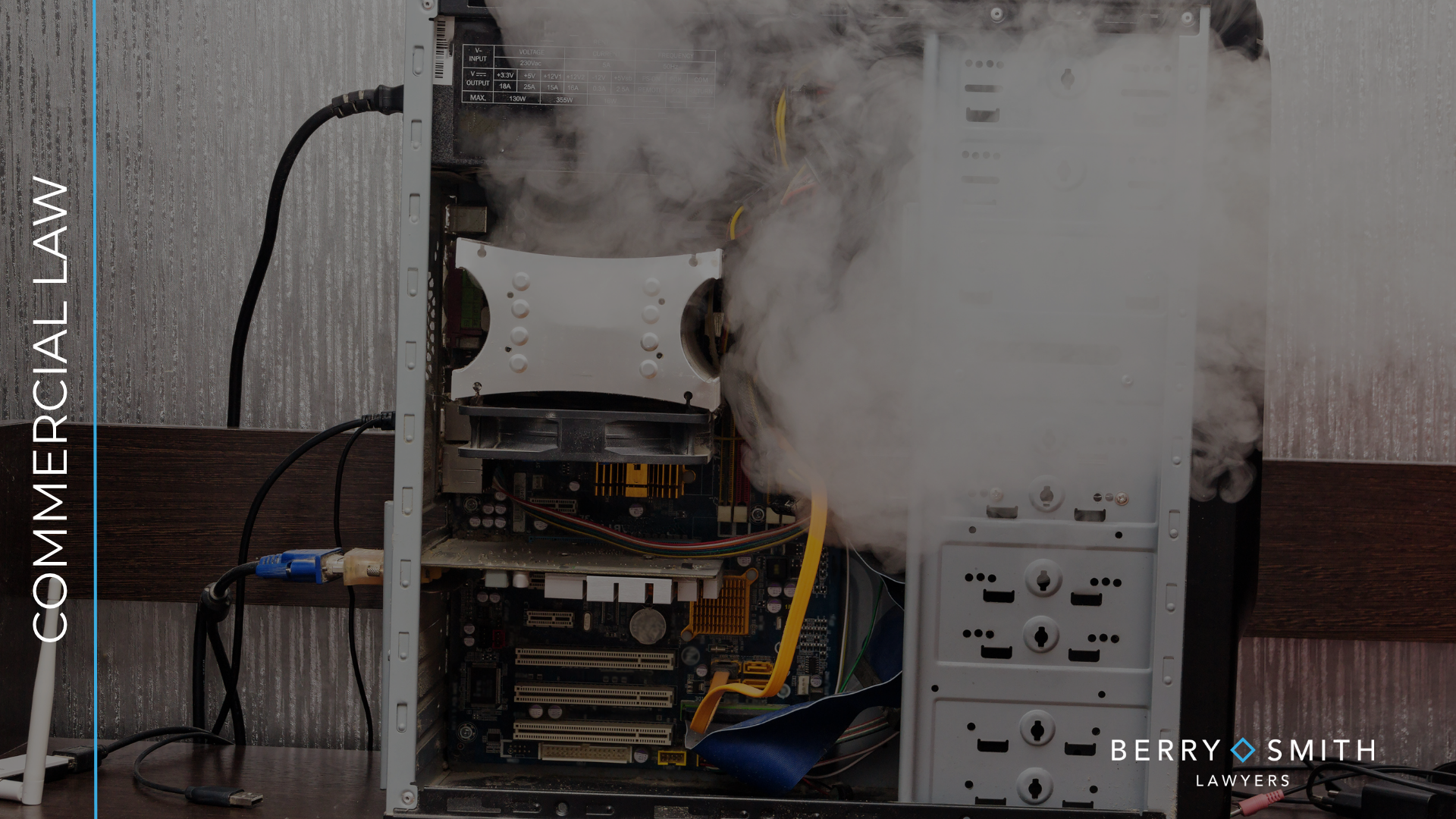
A defective product is rarely just an inconvenience. For a business, it can mean stalled production, missed deadlines, unhappy customers and, in the worst cases, real financial damage.
That risk falls hardest on SMEs, where there’s less room to absorb the cost of a bad batch of components or a supplier who won’t engage. Knowing where you stand legally and acting on it quickly can make a significant difference to the outcome.
This article looks at the main remedies available to businesses buying or selling goods under the law of England and Wales, and some of the practical steps worth taking when a defect comes to light.
Note: this article deals with business-to-business (B2B) contracts for the sale of goods. Consumer sales are governed by a different regime under the Consumer Rights Act 2015, and the position for consumers is not covered here.
When is a product “not fit for purpose”?
The starting point is always the contract. Many commercial agreements set out express warranties, specifications or performance standards that the goods must meet, and these terms will usually take priority in any dispute.
Where the contract is silent, or doesn’t cover the point in issue, the Sale of Goods Act 1979 fills the gap. It implies terms into most contracts for the sale of goods, including that the goods will be of satisfactory quality and, where the buyer has made a particular purpose known to the seller and relied on the seller’s skill or judgement, that the goods will be reasonably fit for that purpose.
Importantly, a product doesn’t need to stop working altogether to count as defective. It might fall short of an agreed specification, perform below the standard a reasonable buyer would expect, or simply be unsuitable for what it was bought to do. Whether any of that amounts to a breach depends on the specific terms agreed and the facts involved.
What remedies are available?
Repair or replacement
Many commercial contracts include their own warranty or returns provisions, setting out how a defect should be reported and what happens next. These are worth checking closely, particularly where the contract sets a deadline for notifying the supplier or specifies a particular process as missing a contractual time limit can weaken an otherwise strong claim.
Rejection
A buyer may, in some circumstances, be entitled to reject defective goods and treat the contract as at an end. This right isn’t unlimited, however. Under section 15A of the Sale of Goods Act 1979, a buyer dealing as a business may lose the right to reject where the breach is so slight that rejection would be unreasonable, unless the contract says otherwise. The right can also be lost through “acceptance”, for example, keeping the goods beyond a reasonable time, or continuing to use or resell them once the defect is known.
Because of this, it’s worth thinking carefully before taking any step that could be read as accepting the goods, even informally.
Damages
Where the supplier is in breach, the buyer may be able to claim damages for the losses that result such as the cost of sourcing a replacement, wasted expenditure, or other losses flowing from the defect.
That said, most commercial contracts limit or exclude liability in some way, whether through a financial cap, an exclusion for certain categories of loss, or both. Whether those clauses hold up depends on their precise wording and the circumstances in which the contract was made, so they need to be read carefully rather than taken at face value.
When a defect causes wider losses
Things get more complicated where a defective product damages something beyond itself. This could be faulty machinery that damages other equipment, spoils stock, or brings production to a halt, for example.
Here, the question isn’t only whether there’s been a breach of contract, but whether the resulting losses are legally recoverable. Concepts like causation, remoteness and the buyer’s duty to mitigate its losses all come into play, and not every consequence that flows from a defect will necessarily be recoverable. The contract itself should also be checked for any clause excluding or limiting liability for this type of loss.
What to do when you discover a defect
Speed and a clear paper trail both matter. As a general checklist:
- Check the contract – review the relevant terms, specifications, warranties and any procedure for reporting defects.
- Document the problem – photographs, inspection reports and test results all help build the evidence base.
- Notify the supplier promptly – follow any contractual notification process and put everything in writing.
- Think before continuing to use the goods – this can affect the remedies still available to you.
- Keep a record of losses – additional costs, replacement purchases, delays and other financial impacts.
- Take reasonable steps to mitigate – the law expects a buyer to limit the damage where it reasonably can.
Prevention is better than cure
For most SMEs, the best time to deal with these issues is at the negotiation stage, not after something has gone wrong. A contract that clearly addresses quality and technical specifications, intended use, inspection and acceptance procedures, warranties, defect notification and liability for resulting losses gives both sides far more certainty than falling back on statutory default terms once a dispute has started.
The same applies in reverse for suppliers: contract terms should accurately reflect the warranties you’re actually prepared to give, and manage your exposure accordingly.
Our commercial team regularly advises businesses on supply and purchase contracts, warranties, and contractual liability. If you want to strengthen your contracts to reduce the risk of a dispute arising in the first place, please do not hesitate to contact us at commercial@berrysmith.com or on 029 2034 5511.